
The Aurisse Journal
Saffron in Men's Fragrance
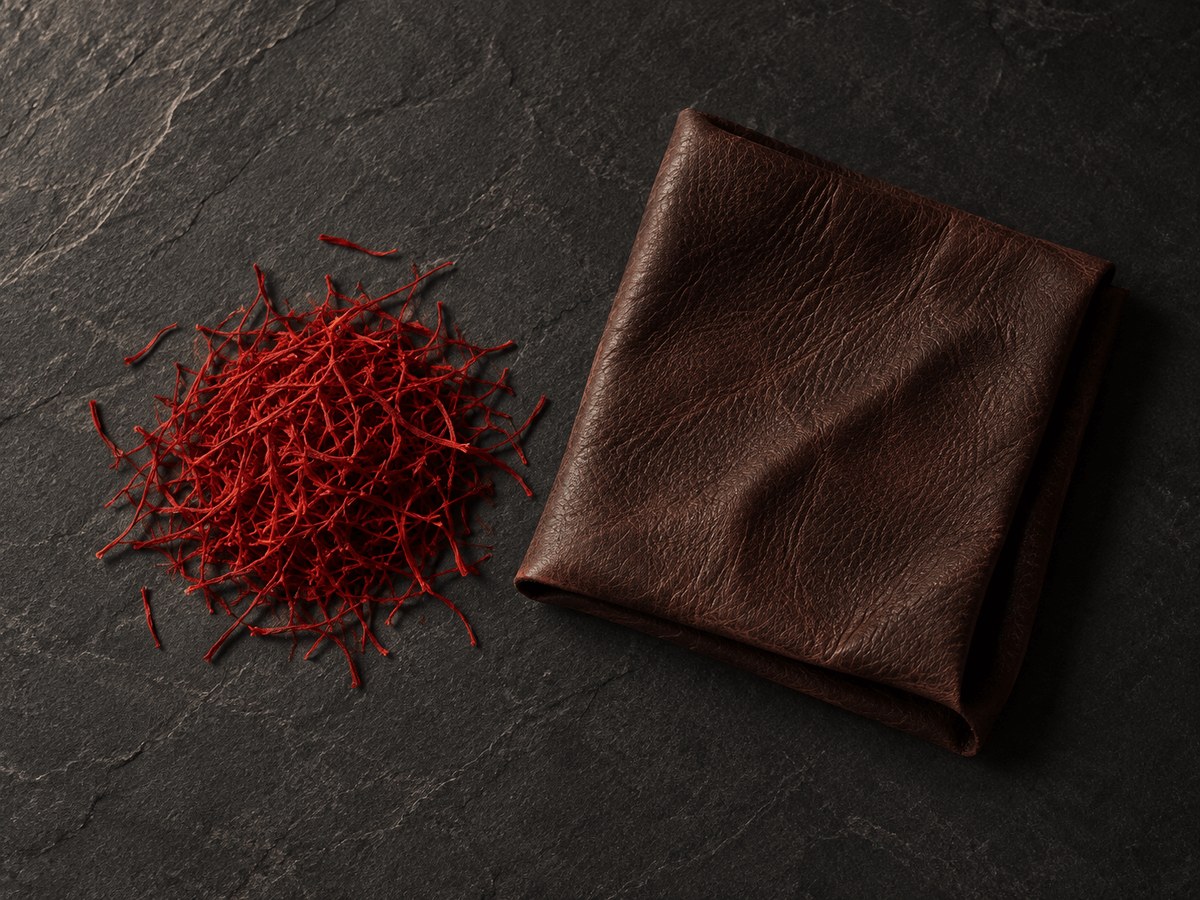
Saffron in fragrance smells leathery and slightly medicinal, with a dry warmth and a faint metallic edge. It is not sweet and it does not smell like the spice tastes in food. In men's fragrance it does a specific job, which is bridging bright openings to heavy bases without either side feeling abrupt.
What it actually smells like
Dry first. There is no sweetness in saffron, which surprises people who know it from cooking.
Then leather. Saffron carries a genuinely leathery quality on its own, slightly animalic and quite dry, which is why it appears so often in fragrances built around leather accords.
There is also a medicinal, almost iodine edge to it, and a faint metallic quality. Those two are what make it polarising. In small quantities they add tension and interest. Overdone, they read as harsh.
Saffron usually sits in the heart of a fragrance, arriving after the citrus opening has burned off and carrying through the middle hours.
Why perfumers use it
Because it solves a structural problem.
A fragrance that opens on bright citrus and finishes on amber and leather has a large gap in the middle. Go straight from grapefruit to oud and the transition feels like two different fragrances stapled together.
Saffron fills that gap. It has enough dryness to connect to citrus and enough leather character to connect to the base, so the fragrance moves rather than jumps.
It is one of the more useful materials in modern men's perfumery for that reason, and it appears far more often than most people realise.

Natural versus reconstructed
Real saffron is among the most expensive agricultural products in the world, harvested by hand from crocus flowers.
Natural saffron absolute is used, but sparingly, and most saffron notes in commercial fragrance are reconstructed from synthetic materials. Safranal is the compound most responsible for the smell, and reconstructions built around it give a cleaner and more controllable result.
This is normal across perfumery rather than a compromise. A reconstructed accord is often more recognisable than the natural extract, and considerably more consistent between batches.
What it pairs with
Leather. The most natural pairing, since saffron is already leathery. It deepens rather than contrasts.
Rose. A long-standing combination in Middle Eastern perfumery. The dryness of saffron stops rose reading as soft or dated.
Oud. Both are dense and slightly medicinal, and together they make one of the heaviest structures in fragrance.
Amber. Saffron's dryness against amber's warmth is a reliable contrast.

Who it does not suit
The medicinal quality is genuinely divisive. Some people register it as sophisticated and some register it as antiseptic, and there is no middle position.
It also skews formal and evening-leaning. Saffron-heavy fragrances rarely work as casual daytime wear, particularly in warm weather where the dryness can read as sharp.
If you dislike leather notes generally, saffron will not be the exception. They share too much character.
Common questions
What does saffron smell like in perfume?
Dry, leathery and slightly medicinal, with a faint metallic edge. Not sweet.
Does saffron perfume smell like the spice in food?
Not really. The fragrance material emphasises the leathery and dry aspects rather than the culinary ones.
Is saffron a masculine note?
It appears more often in men's fragrance but has no inherent gender, and saffron and rose is a classic combination across all markets.
Why is saffron used in expensive fragrances?
The natural material is costly, and the note reads as rich and complex. Most commercial versions are reconstructed rather than natural.
What is the difference between saffron and oud?
Saffron is dry, leathery and sits in the heart. Oud is dense, woody and sits in the base. They are frequently used together.
The short version
Saffron is dry and leathery, not sweet. Its job is connecting bright openings to heavy bases, and it is more polarising than most people expect.