
The Aurisse Journal
Milky Fragrances: Why Lactones Are Everywhere
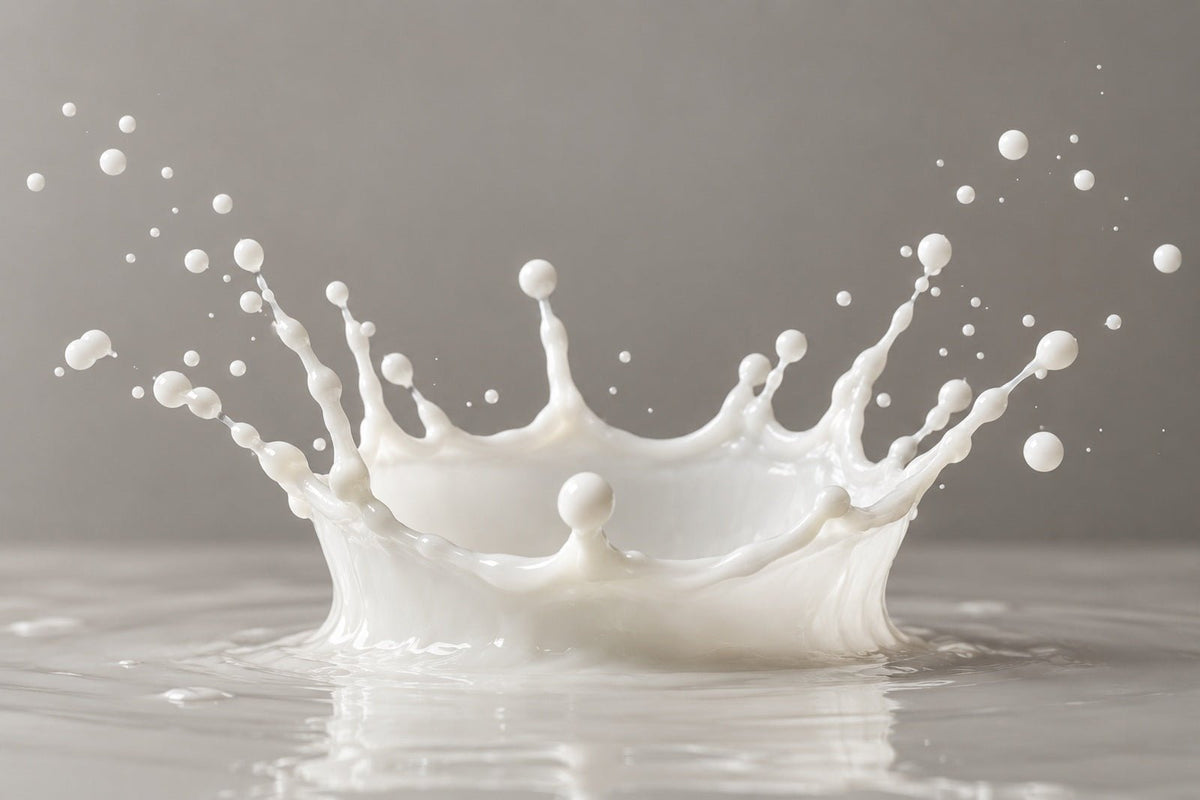
Milky fragrances are built on lactones, the compounds responsible for creamy, dairy-like smells. They read as soft, warm and slightly sweet without being gourmand, and they have become one of the fastest growing directions in fragrance because they sit so close to the smell of skin.
What a lactone actually is
A family of aroma compounds found naturally in milk, coconut, peach and apricot. In perfumery they produce a creamy, rounded quality that no other material group quite replicates.
That is why milk and stone fruit smell related even though they have nothing in common as foods. Both lean on the same chemistry, which is also why peach notes read as soft rather than sharp.
Lactones also have a slightly sour edge in higher concentrations. Handled well that reads as realistic. Handled badly it reads as off milk, which is the failure mode of the whole category.
What milky fragrances smell like
Warm and close. Not sweet exactly, but comforting in a way that is difficult to place, which is the appeal.
Rice milk accords lean starchy and clean. Coconut milk leans tropical and fatty. Plain milk accords lean neutral and skin-like, almost like warm cotton.
What they share is a lack of edges. Where most fragrance families have a sharp element somewhere, milky compositions are rounded throughout, which is why people describe them as cosy rather than impressive.

Why they took off
They sit at the intersection of two things people already wanted.
The first is the move toward skin scents. Lactones smell like warm skin more convincingly than almost anything else, so a milky fragrance reads as an improved version of you rather than as a product.
The second is gourmand fatigue. People wanted comfort without sugar, and milk delivers exactly that. It is the same impulse behind savory gourmands, arriving from a different direction.

What milk pairs with
Sandalwood. Both creamy, and the wood gives the milk structure it otherwise lacks.
Pistachio and almond. Nut and dairy is an obvious combination and a reliable one.
Rice and grain accords. Pushes the whole thing toward something starchy and quietly savory.
Incense. The least obvious and the most interesting. Smoke against milk is a real contrast, and it stops the composition reading as simply soft.
Musk. Almost always present underneath, because it extends the skin effect the lactones are creating.
Who they do not suit
They are quiet. Milky fragrances project very little by design, so if you want to be noticed across a room this is the wrong family entirely.
The sour edge is also a genuine risk. Lactones amplify in heat, and a milk accord that reads as creamy in October can read as slightly turned in July. This is a cold weather direction.
And some people simply cannot get past the dairy association. That reaction tends to be immediate and permanent, so test before committing.
Common questions
What does a milky fragrance smell like?
Warm, creamy and rounded, closer to warm skin than to anything sweet.
What are lactones?
Aroma compounds found in milk, coconut and stone fruit that produce a creamy quality.
Are milky fragrances sweet?
Not inherently. They read as comforting rather than sugary unless built over a sweet base.
Do they last long?
Moderately, and they stay close to the skin. Look for musk or sandalwood underneath for longevity.
When should I wear one?
Autumn and winter. Lactones can turn sour in high heat.
The short version
Creamy, close and skin-like, built on the same chemistry as peach. Quiet by design, and better in cold weather than hot.