
The Aurisse Journal
Incense: The Note That Reads as Cool, Not Warm
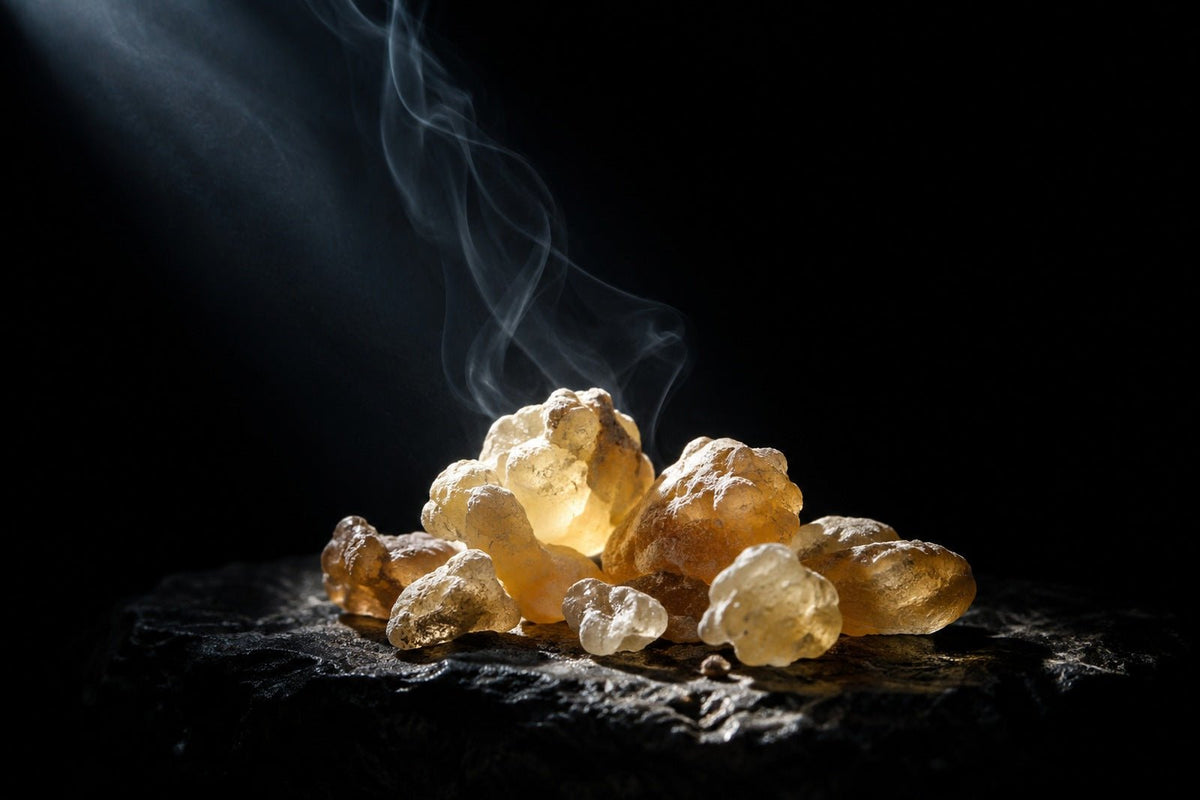
Incense in fragrance means resin smoke, usually frankincense or myrrh, and it smells cool, dry and slightly sacred rather than warm. It is one of the oldest materials in perfumery and one of the most current, because a dry smoky note is the natural correction to years of sweetness.
What incense actually is
Not one material. Several resins, each with a different character, grouped under a word that describes an effect rather than an ingredient.
Frankincense. Also called olibanum. Cool, lemony, slightly peppery and dry. The most common and the most versatile.
Myrrh. Darker, more medicinal, almost bitter. Carries a dusty quality that reads as very old.
Elemi. Brighter and more citrussy than either, with a fresh pine edge.
Benzoin and labdanum. Technically resins, but they lean sweet and warm, which puts them closer to amber than to incense proper.
The thing people get wrong
Incense is cool, not warm.
Most smoky materials in fragrance read as hot. Tobacco, leather, burnt sugar, smoked woods. Incense goes the other way. There is a mineral, almost cold quality to frankincense that makes it feel like stone rather than fire.
That is why it works against warm materials. Incense over amber is a genuine contrast rather than two similar things stacked, and it is the structure behind most of the fragrances people describe as expensive-smelling.

Why it is back
Sweetness fatigue, mostly. After a long run of gourmands, a dry cool resin is about as far from vanilla as you can get while still being comforting.
There is also the association. Incense carries a ritual, ceremonial quality that reads as serious, and it has become attractive for the same reason modern rose has: people want fragrance to feel considered rather than fun.

What incense pairs with
Rose. The combination doing the most work in current perfumery. Smoke gives the flower distance.
Amber. Cool against warm, dry against resinous. One of the most reliable contrasts available.
Leather and oud. All three are dense and slightly medicinal. Together they make something genuinely heavy.
Citrus. Frankincense already has a lemony edge, so citrus extends what is there rather than contrasting with it.
Milk and soft woods. The most modern pairing. Smoke against something creamy is unexpected and works better than it sounds.
Who it does not suit
The religious association is unavoidable for some people. If church incense is what you smell rather than frankincense as a material, the reference will sit between you and the fragrance permanently.
It also skews austere. Incense fragrances rarely read as warm or approachable, and that cool distance is the point rather than a flaw.
And it is a cold weather direction. In heat, resin notes can turn sharp and slightly acrid in a way that is genuinely unpleasant.
Common questions
What does incense smell like in perfume?
Cool, dry and resinous with a peppery edge. Smoky without being warm.
Is frankincense the same as incense?
Frankincense is one resin. Incense is the broader category covering several.
Is incense a masculine note?
No. It appears across all categories, and rose and incense is used widely in fragrances marketed to women.
What is the difference between incense and amber?
Incense is cool and dry. Amber is warm and sweet. They are frequently combined for exactly that contrast.
When should I wear incense?
Autumn, winter and evenings. It turns sharp in heat.
The short version
Cool and dry rather than warm. The natural correction to sweetness, and best worn when the air is cold.