
The Aurisse Journal
Honey as a Fragrance Note
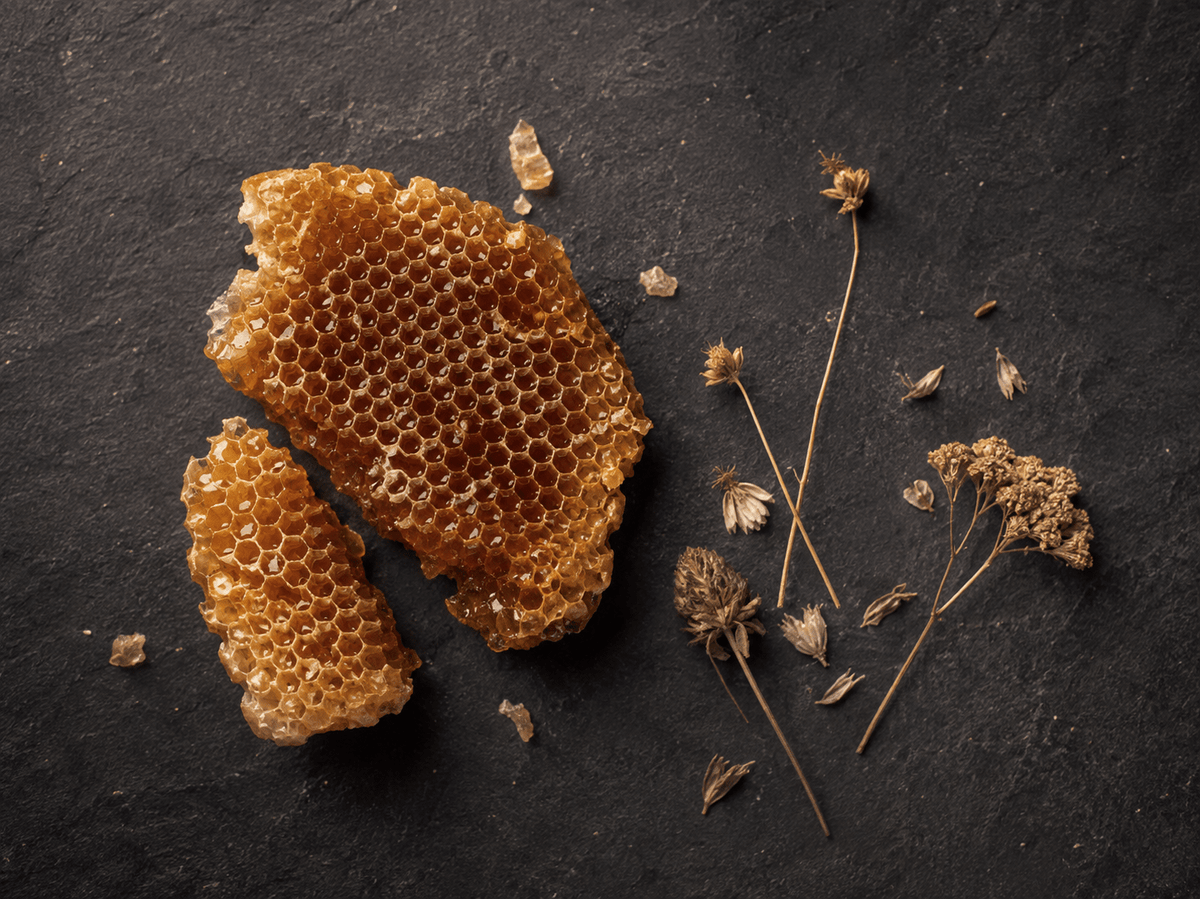
Honey in fragrance is sweeter and considerably stranger than people expect. It carries a warm, waxy sweetness with something faintly animalic underneath, and that second quality is why it has moved from a background note to a subject in its own right over the last couple of years.
What it actually smells like
Two things at once, and the tension between them is the interest.
The obvious part is sweetness, but it is not sugar. Honey reads as thick and slightly waxy, closer to beeswax and dried flowers than to anything you would put in tea.
The less obvious part is animalic. Real honey absolute carries a distinctly barnyard quality, and in higher concentrations it can read as almost dirty. Perfumers either lean into that or dial it back, and the choice completely changes the fragrance.
There is also a floral thread running through it, because honey is made from flowers and the material retains some of that.
Where it sits
Usually the heart or the base. Honey has weight and does not evaporate quickly, so it tends to carry the middle hours and persist into the dry-down.
Both natural honey absolute and synthetic reconstructions are used. The naturals are more animalic and less predictable, the synthetics cleaner and sweeter. Most mainstream fragrances use the latter, which is why honey in a commercial release rarely has the barnyard edge purists talk about.

Why it is having a moment
Gourmands have dominated for years, and honey is the natural next step from vanilla and praline. It offers sweetness with more complexity and less of the dessert association that makes some people avoid gourmands entirely.
The animalic side also fits the wider move toward materials with some tension in them. After a long run of clean, safe compositions, notes that are slightly difficult have become interesting again.

What honey pairs with
Tobacco. The classic pairing. Tobacco's dryness cuts the stickiness and the honey softens tobacco's harshness.
Rose and orange blossom. Honey amplifies florals and makes them read as richer and more three-dimensional.
Leather. Sweet against dry, warm against austere. One of the more interesting contrasts available.
Vanilla and tonka. Safe and comfortable, though it risks tipping into pure dessert without something dry underneath.
Who it does not suit
It is genuinely sticky. In heat and humidity honey amplifies more than almost any other sweet note, and what reads as warm in November can read as cloying in July.
The animalic quality also divides people sharply. Some register it as sensual and some register it as unwashed, and there is no talking anyone across that line.
And if you dislike sweetness in fragrance generally, honey will not be the exception that changes your mind. It is one of the sweetest materials in common use.
Common questions
What does honey smell like in perfume?
Warm, waxy and sweet, with a faintly animalic edge underneath.
Is honey a base note?
Usually heart or base. It has weight and lingers into the dry-down.
Is honey fragrance too sweet?
It can be. Well-built ones pair it with something dry like tobacco or leather.
Is honey masculine or feminine?
Neither. Honey and tobacco is common in men's fragrance, honey and rose in women's.
When should I wear it?
Autumn and winter. It amplifies badly in heat.
The short version
Sweet and waxy with something animalic underneath. Best against a dry note, best in cold weather, and more divisive than the description suggests.